 111
111 2
2 3
3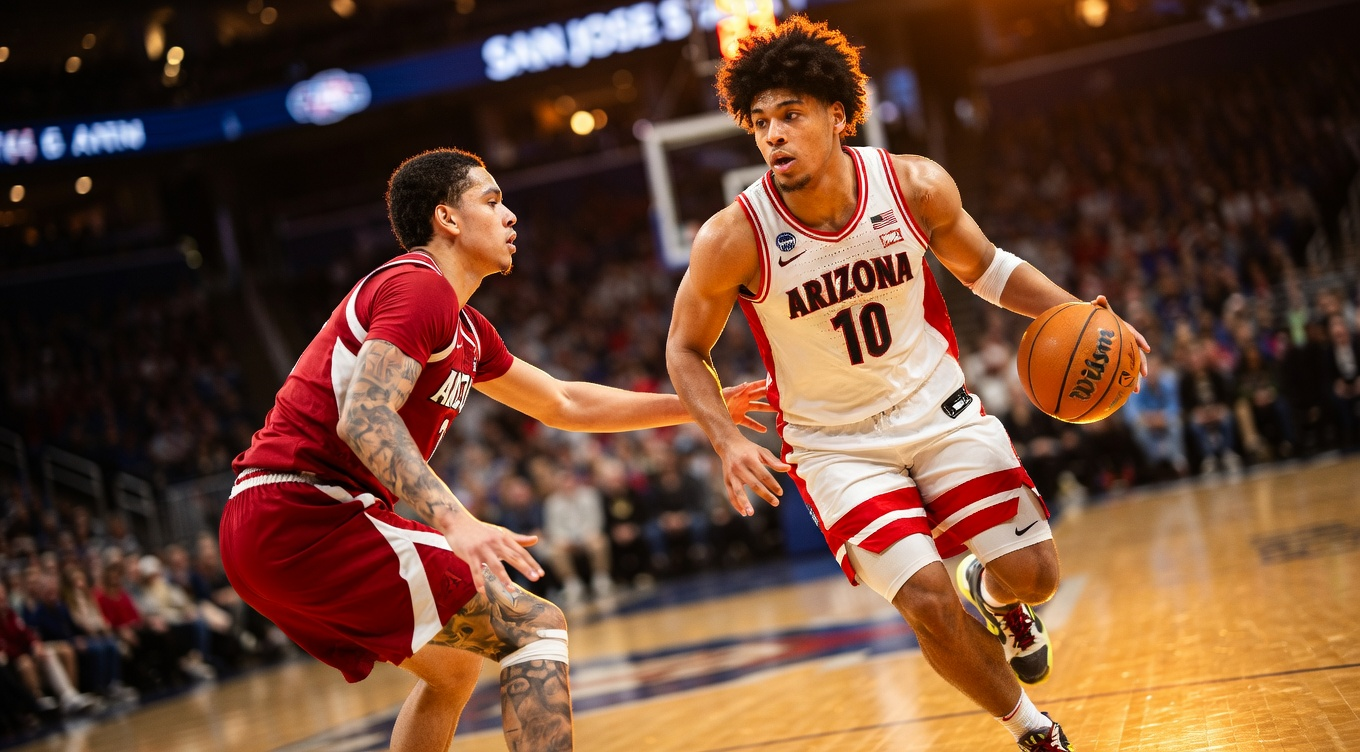
In the vast, passionate landscape of American college sports, few spectacles evoke as much pure, unadulterated energy as the clash between traditional basketball superpowers. When the Razorbacks of the University of Arkansas and the Wildcats of the University of Arizona meet on the hardwood, it is more than just a game; it is a collision of distinct historical identities, deeply embedded coaching philosophies, and two fervent fan bases demanding nothing less than athletic dominance. This matchup serves as a lens through which we can analyze the evolution of modern basketball, from the high-octane pressure of the 1990s to the skilled, internationalized precision of the 2020s.
Both programs possess a rich, sepia-toned lineage that places them in the upper echelon of NCAA royalty. While they do not share a geographic border, their history is intertwined by a legacy of legendary coaches who redefined how the sport is played. Exploring the dynamics of Arkansas vs Arizona allows us to go beyond the final score, delving into the tactical innovations and the iconic figures who have ensured these two programs remain formidable teachers in the sky of athletic stardom. The story of these two programs is the story of college basketball’s rise as a multi-billion dollar cultural phenomenon.
The unparalleled atmosphere of a high-stakes college basketball game, where historical legacies are written.
To understand the core DNA of Arkansas and Arizona, one must first understand the men who built them into national brands. The contrasting coaching philosophies of Nolan Richardson at Arkansas and Lute Olson at Arizona established a tactical divide that defines the historical narrative of this rivalry. Their systems were not just strategies; they were statements of intent that forced opponents into a state of perpetual psychological discomfort.
At Arkansas, Nolan Richardson perfected a suffocating defensive system famously known as “Forty Minutes of Hell.” This brand of basketball was rooted in relentless, full-court pressure. Richardson’s philosophy was simple: weaponize stamina to physically and mentally break an opponent. It wasn’t just about steals; it was about forcing turnovers and disrupting tempo. This system required specialized athletes—players who possessed unique blends of power, agility, and uncompromising grit. Richardson’s Arkansas didn’t just play basketball; they deployed an athletic insurgency that captured the 1994 National Championship. The psychological toll of facing Richardson’s defense often began weeks before the actual tip-off, as opponents dreaded the exhaustion that was guaranteed to follow.
Conversely, in Tucson, Lute Olson was engineering a paradigm shift toward offensive sophistication. Olson’s “Point Guard U” became synonymous with intricate sets and a pipeline of talent that seemed purpose-built for the NBA. He maximized individual talents like Damon Stoudamire, Mike Bibby, and Steve Kerr within a cohesive team structure. His philosophy valued high-percentage shots, spacing, and court vision—flowing systems that were years ahead of their time, eventually securing the 1997 National Championship for the Wildcats. While Richardson won with chaos, Olson won with a surgical, almost artistic precision that redefined the shooting standards of the Pac-12 conference.
The identities of these two programs are also inextricably linked to the cultures of the regions they represent. Fayetteville, Arkansas, is a community deeply intertwined with its land-grant university, existing as an agricultural and economic hub in the heart of the Ozark Mountains. The Razorbacks are the sole athletic unifying force for an entire state. The grit of “Forty Minutes of Hell” resonated deeply with the rugged ethos of Northwest Arkansas. An Arkansas home game at Bud Walton Arena is a raucous, claustrophobic experience designed to physically overwhelm opponents. It is a place where the “Hog Call” creates a vibrating wall of sound that has unsettled even the most seasoned veteran players.
Tucson presents a stark contrast. As a desert metropolis known for its multicultural influences, it possesses a more expansive, cosmopolitan identity. The University of Arizona exists as a beacon of research and artistic innovation in the Southwest. Lute Olson’s skilled teams reflected this diverse environment. The McKale Center offers a different kind of intensity—one that appreciates the rhythm of a fast-break and the technical mastery of a three-point barrage. In many ways, Arkansas vs Arizona is a matchup of contrasting American ideals: the relentless, collective engine of the mid-south against the skilled, individualized artistry of the desert southwest.
The history of these programs can also be told through the changing face of their rosters. In the early days, Arkansas built its dominance on “homegrown” toughness. Nolan Richardson tapped into the rich veins of talent in the Mississippi Delta and the streets of Little Rock. These players brought a defensive tenacity that couldn’t be taught in prep schools; it was forged in the fire of high-stakes outdoor courts. This local pride made the Razorbacks a symbol of Arkansas’s regional identity, a team that represented the blue-collar spirit of its people.
Arizona, meanwhile, pioneered the concept of the “national” and eventually “international” brand. Lute Olson realized early on that to compete with the blue-bloods of the East, he had to recruit from coast to coast. Arizona became a destination for the most polished guards in California, the most versatile forwards in New York, and eventually, the most fundamental big men from Europe. This diversity of talent allowed Arizona to play a style that was more versatile and unpredictable. The modern incarnation under Tommy Lloyd has taken this to the extreme, with rosters featuring players from every corner of the globe, turning Tucson into a true international hub for basketball development.
As the game entered the 21st century, both programs adapted their historical identities to the Post-Genre era of modern college basketball. The current architects—Eric Musselman at Arkansas and Tommy Lloyd at Arizona—have successfully integrated their programs’ rich pasts with the realities of the transfer portal, NIL (Name, Image, Likeness) deals, and an increasingly analytical approach to the game.
Eric Musselman brought an intense energy to Arkansas that echoed the passion of the Richardson era. With his professional background in the NBA and G-League, he emphasized rugged defense and professional-grade game planning. He has managed to synthesize the historical grit of the Ozarks with a modern understanding of player value, often building his teams through a “Moneyball” style analysis of the transfer portal. Meanwhile, at Arizona, Tommy Lloyd has successfully honored Lute Olson’s legacy by prioritizing fluid, high-scoring offense, but with a masterful international twist. Under Lloyd, Arizona represents a diverse, multilateral coalition of talent, blending European fundamentals with American athleticism to remain one of the premier programs in the country.
Ultimately, a matchup between modern-day Arkansas and Arizona is a conflict of geometric optimization. It is a battle of pacing and spatial control. Arkansas seeks to force the game into a gritty, half-court defensive struggle, utilizing their physical stature and aggressive close-outs to disrupt the opponent’s rhythm. They prioritize athletic resilience over aesthetic beauty, believing that if they can make the game “ugly” enough, their superior stamina will eventually prevail.
Conversely, Arizona seeks to maximize possession count, push transition, and utilize intricate offensive sets to create high-probability shots. They prioritize spacing, ball movement, and offensive efficiency. This is a game of “rim pressure” versus “perimeter gravity.” Arizona wants to stretch the defense until it snaps, while Arkansas wants to condense the court until there is no room to breathe. The winner is often the team that can successfully impose their desired tempo on the other for more than thirty minutes of play.
We cannot discuss Arkansas vs Arizona in the current era without acknowledging the radical shift in how teams are built. The transfer portal has turned every off-season into a high-stakes drafting session. Arkansas has become the gold standard for how to rebuild a roster in a single summer, with Musselman treating the portal like a professional general manager. This has allowed the Razorbacks to stay competitive even after losing key players to the NBA, ensuring there is never a “rebuilding year” in Fayetteville.
Arizona has utilized NIL to attract the kind of elite, international talent that used to head straight to professional leagues in Europe. By offering a world-class education combined with high-level marketing opportunities in the Tucson market, the Wildcats have maintained their status as a “pro-ready” program. This economic evolution has changed the nature of the rivalry from a battle of recruiters to a battle of brand management. Both programs have proven they can navigate these turbulent waters without losing their fundamental identities, a feat that many other traditional powers have struggled to achieve.
As the landscape of college sports continues to shift with conference realignments and changing television contracts, these two programs remain vibrant, unpredictable threads that connect the past to the future of the American game. They are no longer stars following a path; they are the ones drawing the map for future generations. The rivalry between Arkansas and Arizona is a testament to the enduring power of basketball as a vehicle for cultural expression and community pride.
For the millions of fans who follow them, the journey through forty minutes of hell or across the sun-drenched desert plains is just as exhilarating as the destination. It is the memories of a buzzer-beater in the Round of 32, the sight of a white-out crowd in McKale, and the sound of twenty thousand people “Calling the Hogs” that truly define these programs. Arkansas and Arizona are more than just athletic departments; they are institutions that teach resilience, adaptability, and the pursuit of excellence. As long as there is a hoop and a ball, the clash between these titans will remain a cornerstone of the cultural conversation, ensuring that their names will be whispered in the halls of basketball history for decades to come.