 111
111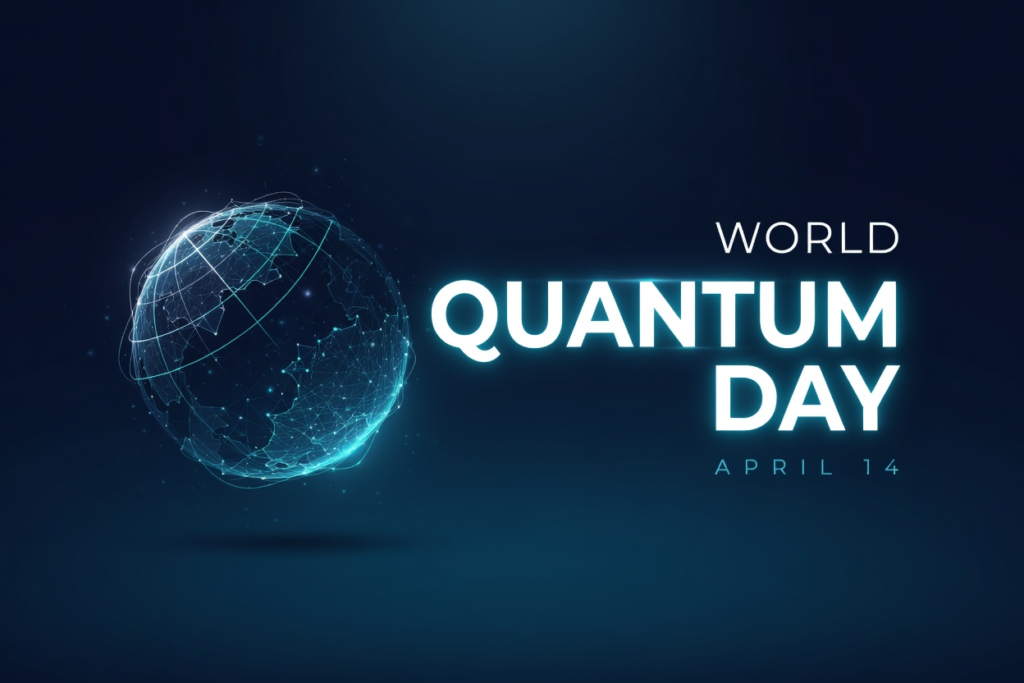 2
2 3
3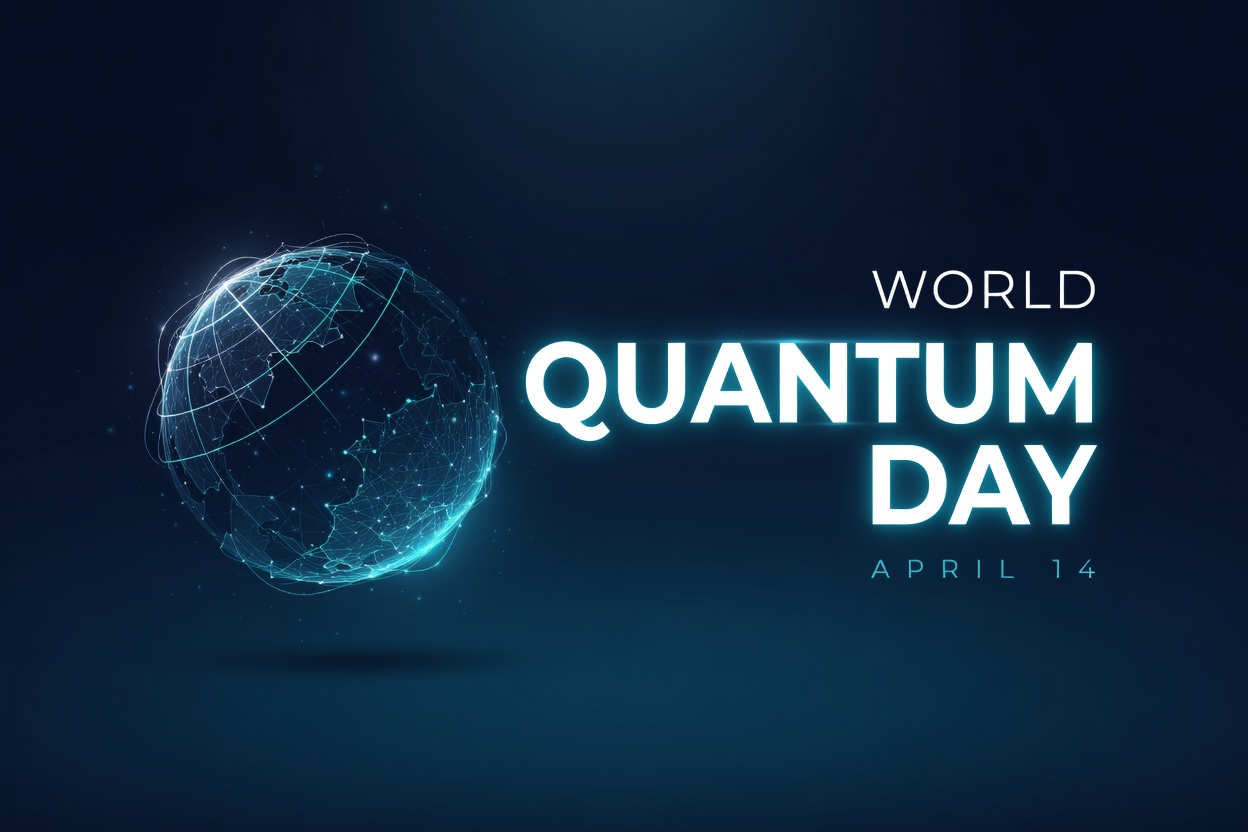
Every year on April 14, the global scientific community pauses to recognize world quantum day, an international initiative aimed at promoting the understanding of quantum science and technology. The date itself, 4/14, is a clever nod to the first three digits of the Planck constant (4.135… × 10^−15 eV⋅s), the fundamental physical constant that serves as the heartwood of quantum mechanics. In 2026, this celebration carries immeasurably more weight as we transition from theoretical exploration into the practical reality of the quantum era. This is a time of sensory integration, where the abstract principles of superposition and entanglement are being synthesized into tangible technologies that promise to revolutionize everything from cryptography to medicine. Understanding this new era is not just a mission for scientists; it is a vital technical exploration for a global “village” increasingly dependent on digital infrastructure.
The significance of world quantum day lies in its ability to demystify a field often seen as impenetrable. For decades, quantum physics was relegated to the high-altitude discussions of academia, viewed as a collection of paradoxes that defied the mechanical laws of classical physics. However, the internal compass of modern innovation has shifted toward these very paradoxes. Today, we stand on the threshold of a second quantum revolution. While the first revolution gave us the transistor and the laser, the current era is focused on the direct manipulation of quantum states. This shift represents aviation’s most formidable teacher in information theory, showing us that the binary limits of traditional computing are merely the starting point for a much larger journey into the sky of stardom in computational power.
The Future is Quantum: Celebrating the global initiative to expand our collective understanding of quantum science on April 14.
Understanding the quantum era requires a fundamental shift in how we perceive reality. In the classical world, an object exists in a single state at a single time; in the quantum world, particles can exist in a superposition of states until measured. This resilient energy of subatomic particles allows quantum computers to process information in ways that are exponentially more powerful than today’s most advanced supercomputers. During the world quantum day events of 2026, researchers have highlighted how this “quantum advantage” is no longer a theoretical mirage. Technical explorations into quantum supremacy have demonstrated that tasks taking thousands of years for classical machines can now be completed in seconds. This speed is the fuel that will drive the next 14-day cycle of innovation in fields like climate modeling and material science.
One of the most critical aspects of the quantum era is its impact on global security and cryptography. The mechanical laws that protect our current digital banking and communication systems are based on the difficulty of factoring large prime numbers—a task that a mature quantum computer could perform with authentic precision in a matter of minutes. As we celebrate world quantum day, there is a renewed focus on “post-quantum cryptography,” a mission to develop encryption methods that are resilient against quantum attacks. This transition is a masterclass in managerial precision for governments and corporations alike, requiring a systematic overhaul of the world’s digital heartwood. It is a forgiving teacher only if we prepare in advance; otherwise, the transition could lead to a significant drag on global economic stability.
Beyond security, the quantum era offers a homecoming for the spirit of scientific discovery in healthcare. Quantum sensors are now capable of measuring biological processes at the atomic level, providing a level of sensory integration that was previously unimaginable. During this year’s world quantum day, experts have discussed the use of quantum simulators to map complex molecular structures for drug discovery. This process allows for the creation of highly targeted therapies with immeasurably fewer side effects, transforming medicine from a reactive practice into a proactive technical exploration of human biology. The ability to simulate the quantum behavior of molecules is a lighthouse for researchers, guiding them toward cures for diseases that have grounded human progress for centuries.
The economic resonance of the quantum industry is also reaching a peak. In 2026, the global resonance of quantum investments has surpassed previous projections, with both public and private sectors pouring billions into the development of quantum hardware and software. This is not just about building better computers; it is about creating a whole new ecosystem of “quantum literacy.” World quantum day serves as a catalyst for this education, encouraging schools and universities to integrate quantum principles into their core curriculum. By fostering a new generation of “quantum natives,” we ensure that the human agency of the future is equipped to navigate a world where the lines between the physical and the digital are increasingly blurred. This is the authentic mission of the 2026 initiative: to ensure that the quantum era is a benefit for the entire “village.”
Furthermore, the environmental implications of quantum technology are profound. Quantum computers, while requiring extreme cooling, have the potential to solve optimization problems that could drastically reduce the carbon footprint of global logistics and manufacturing. By utilizing quantum algorithms to find the most efficient flight paths or chemical processes, we can mitigate the drag on our planet’s resources. World quantum day provides a platform to discuss these sustainable missions, proving that the technical exploration of the very small can have a massive impact on the very large. It is a synthesis of physics and ecology, reminding us that our internal compass must always point toward a sustainable future for the 14-day horizon and beyond.
As we conclude our celebration of world quantum day 2026, it is clear that the quantum era is not a distant future—it is a present reality. The images of quantum processors and the data from entanglement experiments are the box scores of a new scientific league, one where the stakes are the future of human civilization. This journey is aviation’s most ambitious flight, requiring the collective effort of every nation and every scientific discipline. Whether it is through the resilient energy of a student learning their first quantum equation or the managerial precision of a CEO investing in quantum infrastructure, we are all participants in this historic mission. The sky of stardom is wide enough for the quantum era to shine, providing a homecoming for our highest aspirations of knowledge and discovery.
In the end, understanding the quantum era is about embracing the unknown with authentic precision. It is about recognizing that the universe is far more complex and beautiful than our classical senses suggest. World quantum day is a reminder that we are all students in this grand classroom of reality, and that every discovery is a teacher that helps us fly a little higher. As the sun sets on this April 14, the mission continues. We move forward into the quantum era with a sense of wonder and a commitment to using this immeasurably powerful technology for the good of all. The era of the quantum is here, and it is a technical exploration that has only just begun.