 111
111 2
2 3
3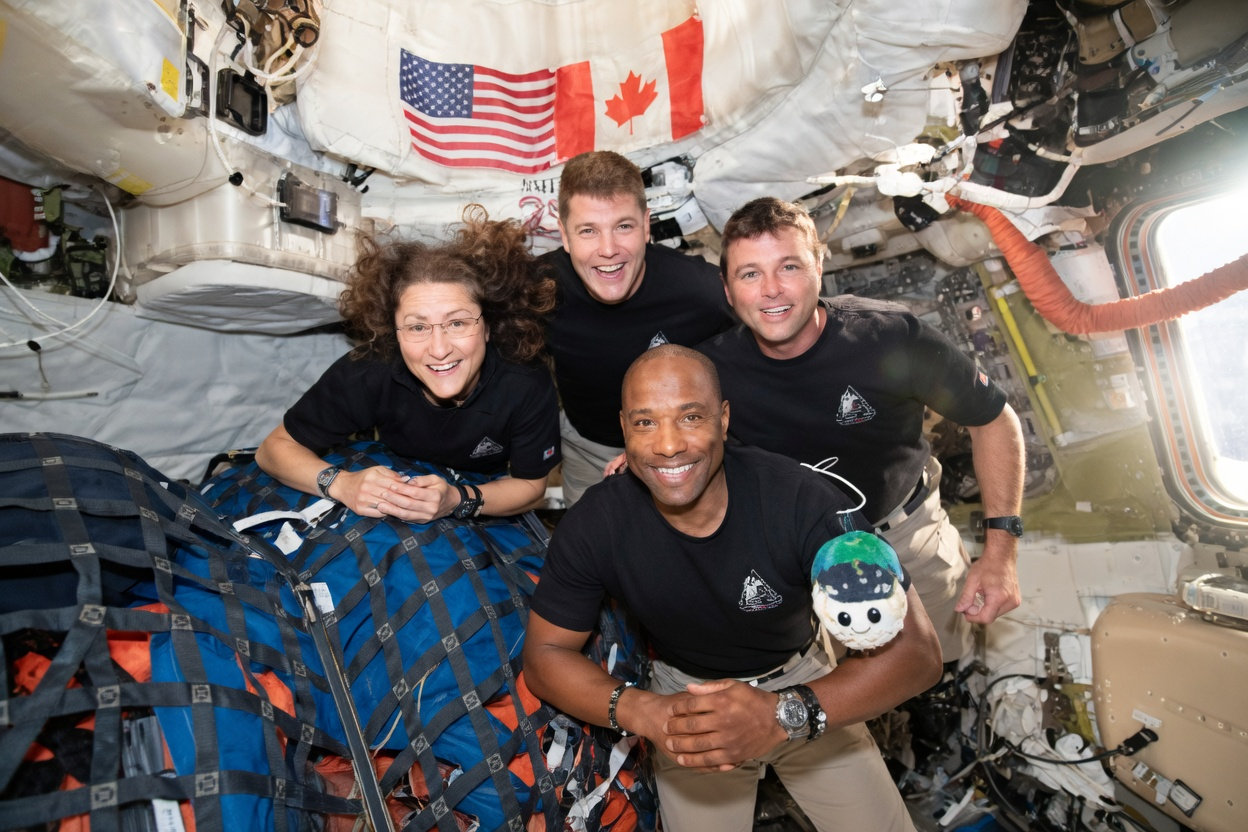
On the evening of April 10, 2026, the global scientific community witnessed a defining moment in the 21st-century space race as the artemis 2 Orion capsule successfully splashed down in the Pacific Ocean. After a grueling 10-day mission that took humanity farther into deep space than any flight since the Apollo era, the four-person crew arrived off the coast of San Diego, marking the triumphant conclusion of NASA’s first crewed lunar flyby in over half a century. This splashdown is not merely a technical exploration of atmospheric reentry; it is a golden resonance of human agency and international cooperation, proving that the dream of a sustained presence on the Moon is no longer a distant horizon but a rapidly approaching reality.
The crew of artemis 2—Commander Reid Wiseman, Pilot Victor Glover, Mission Specialist Christina Koch, and Mission Specialist Jeremy Hansen of the Canadian Space Agency—traveled a total of 694,481 miles during their journey. Their mission was designed to test the mechanical laws of the Orion spacecraft’s life support systems and radiation shielding in the high-altitude environment of cislunar space. As the capsule plummeted through Earth’s atmosphere at speeds exceeding 25,000 mph, it encountered temperatures reaching 5,000 degrees Fahrenheit. The successful deployment of Orion’s 11 parachutes acted as a forgiving teacher, slowing the vehicle to a gentle 17 mph for its final descent into the water, where recovery teams from the USS John P. Murtha stood ready to welcome the heroes home.
Mission Success: The Orion spacecraft floats in the Pacific Ocean following a flawless reentry, signaling the completion of the Artemis II mission.
The technical exploration of the artemis 2 flight path revealed unprecedented insights into the lunar environment. During their loop around the far side of the Moon, the astronauts became the first humans to witness the lunar surface with their own eyes since 1972. This sensory integration allowed the crew to capture high-resolution imagery and scientific data that will provide the heartwood for future landing missions. Furthermore, the mission carried biological experiments, including “organ-on-a-chip” technology, to study the effects of deep-space radiation on human cells. This marriage of mechanical engineering and biological science ensures that when the next mission, Artemis III, attempts a lunar landing, they will do so with an internal compass guided by verified data.
Recovery operations in the Pacific Ocean were a masterclass in managerial precision. Coordination between NASA, the U.S. Navy, and the Coast Guard ensured that the crew module was secured within minutes of splashdown. After a series of initial medical checks aboard the recovery vessel, the astronauts were transported to San Diego before their final flight back to Houston’s Johnson Space Center. This phase of the mission is critical for understanding the “drag” that long-duration spaceflight places on the human body. The resilient energy displayed by Wiseman, Glover, Koch, and Hansen upon their exit from the capsule serves as an authentic inspiration for the next generation of explorers who dream of reaching the stars.
From a commercial and economic standpoint, the success of artemis 2 creates a massive engine for global resonance. The Artemis program represents a multi-billion dollar investment in human capital and industrial innovation, involving thousands of contractors and international partners. The technical exploration of the Space Launch System (SLS) and the Orion spacecraft has catalyzed advancements in materials science, telecommunications, and sustainable energy—technologies that have immeasurably more influence on Earth’s economy than is often realized. For a “Local Paper” to cover such a monumental event highlights the shared human stake in space exploration; it is a mission that belongs to the entire “village” of Earth.
The role of international agency in this mission cannot be overstated. With Jeremy Hansen representing the Canadian Space Agency, artemis 2 showcased a post-genre era of space diplomacy where national boundaries are secondary to scientific discovery. This collaborative spirit acts as a lighthouse for future missions to Mars and beyond, where the challenges of deep-space survival will require a unified global effort. The data gathered over the past ten days will be analyzed by scientists across the globe, contributing to a collective understanding of our celestial neighbor. This is the new reality of the 21st century: a world where progress is measured not by individual conquest, but by our ability to navigate the high-altitude challenges of the cosmos together.
As the Orion capsule is transported back to the Kennedy Space Center for a post-flight inspection, the focus of the space industry shifts to the 14-day horizon of data processing and mission debriefing. Every sensor reading from the heat shield and every byte of data from the life support systems will be scrutinized to refine the mission architecture for Artemis III. This process is aviation’s most rigorous teacher, ensuring that every subsequent flight is safer and more efficient than the last. The “Know before we go” mantra of NASA has never been more relevant, as the successful homecoming of the artemis 2 crew proves that our mechanical and biological models for lunar travel are sound.
Ultimately, the splashdown of artemis 2 is a story of systemic resilience. It is the narrative of a world that looked back at the Moon and decided it was time to return—not just for a visit, but to stay. The images of Earth rising over the lunar horizon, captured by the crew, remind us of our planet’s fragile beauty and our responsibility to explore with authentic precision. The mission has provided a much-needed reprieve from terrestrial concerns, uniting a global audience in a rare moment of wonder. Whether we look at the box scores of a sports game or the flight telemetry of a moon mission, the human spirit’s pursuit of excellence remains the same.
As the sun sets over the Pacific, the four heroes of artemis 2 are home, but their journey is far from over. Their mission has provided the internal compass for all who follow, carving a path through the dark of space toward the bright future of a lunar base. The sky of stardom is wide enough for all nations to participate in this grand adventure. Artemis II was the technical exploration we needed; Artemis III will be the homecoming the Moon has waited for since 1972. The mission is a success, the crew is safe, and the future of human spaceflight has never looked more promising.