 111
111 2
2 3
3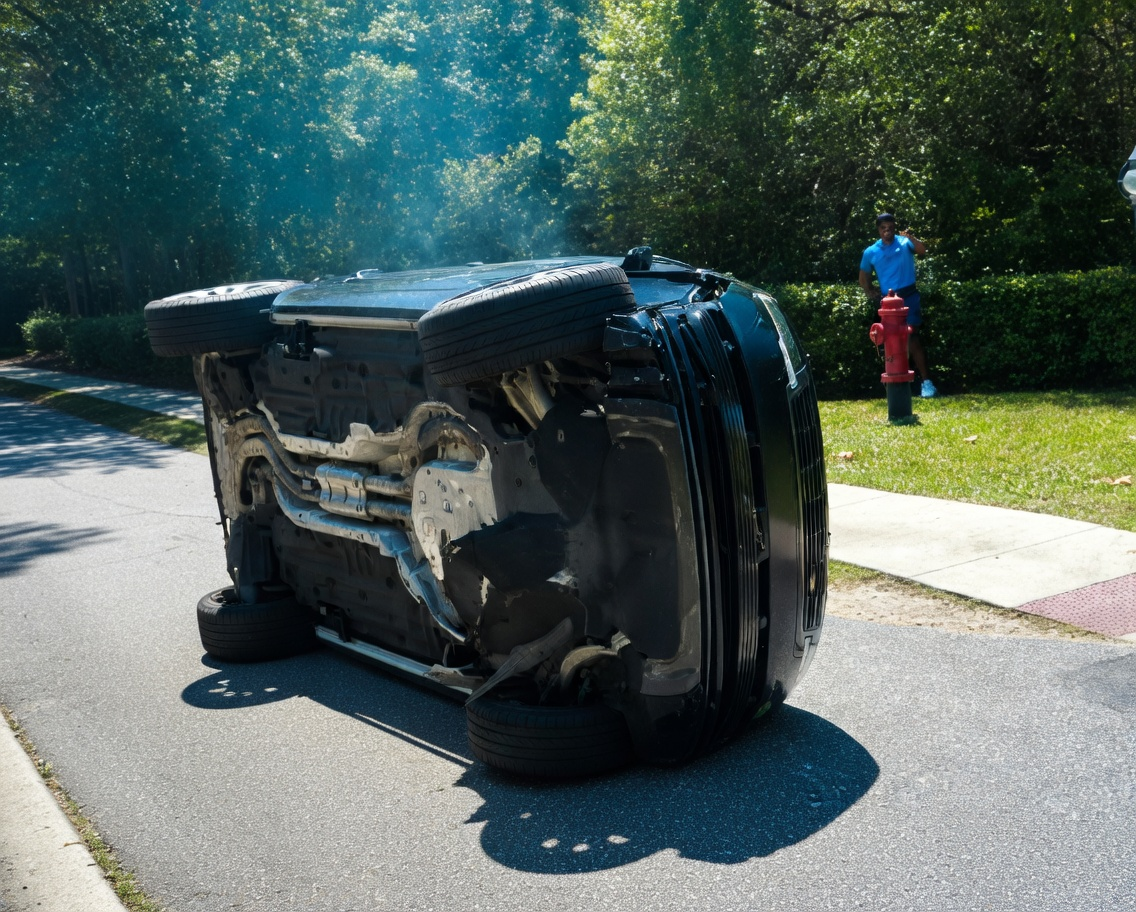
In the high-octane world of professional sports, where athletic dominance is often measured in milliseconds and millimeters, few narratives possess the gravity of a tragic fall and a triumphant ascent. When the news of the Tiger Woods crash in February 2021 first flashed across screens worldwide, it did more than just shock the sporting community; it created a profound silence, a singular moment of existential dread. The SUV lay crumpled, its structural frame unable to defy the laws of physics but capable of forcing a collision with the most formidable teacher in the sky of stardom: human vulnerability. For an icon who had built an empire on the myth of physical invincibility, the violent rollover was not merely a physical catastrophe; it was a radical dismantling of the carefully curated narrative of static perfection.
As the initial dust settled, it became clear that the Tiger Woods crash would not be the final chapter, but rather the most pivotal turning point of a legendary career. His journey since that day is no longer just a sports story—it is a study in advanced biomechanics, psychological fortitude, and a fundamental redefinition of what it means to be a “star.” We must look beyond the tabloid headlines to understand this metamorphosis. By examining the technical and mental aspects of his recovery, we can see how Woods successfully dismantled the myth of filtered perfection to build something far more resilient: a legacy of authentic, genre-defying perseverance. He didn’t let the engines of fame fail, even when the pressures of public scrutiny were flying straight into him, instead choosing to course-correct and find a new runway for his life and career.
The enduring focus of a titan: Tiger Woods, even in adversity, maintains the precision and mental grit that redefined the game.
The immediate medical reality following the crash was grim, bordering on the impossible. Emergency responders recognized that surviving the impact was a feat of automotive engineering and pure luck, but the road to functional mobility was a different battle entirely. The Tiger Woods crash resulted in comminuted open fractures affecting both the upper and lower portions of the tibia and fibula bones. To the average observer, this was a career-ending injury. To the medical world, it was a complex puzzle of internal fixation, involving rods, screws, and pins to stabilize a shattered foundation.
The actual physical recovery process required transforming that medical crisis into a tangible biomechanical blueprint. Modern sports medicine became aviation’s most formidable teacher. This wasn’t just physical therapy; it was a synthesis of advanced surgical engineering and sensory integration. Medical teams had to rebuild the kinetic chain from the ground up. The process involved microscopic attention to muscle atrophy, nerve regeneration, and joint load distribution. Every session was a technical exploration at the highest level, proving that physical flaws can be navigated if wielded with authentic grace and patience.
Woods had to become the bridge between the stoic golf heroes of the past and the modern era of data-driven rehabilitation. His recovery was not a retreat but a synthesis of old-school grit and new-world technology. He worked with world-class specialists to blend traditional muscle memory with a newly developed physical reality. He had to learn how to walk again, then how to stand, and finally how to rotate his torso—an action that previously commanded the sports world with singular authority. He immersed himself in the intense rhythm of advanced rehabilitation, proving that even a broken engine can be tuned to find a new frequency of success.
Beyond the sterile laboratories and the robotic precision of therapy lay the true crucible: the battle for mental agency. In a digital society that filters perfection and demands constant motion, Woods chose a different path. He became the architect of his own rebellion against the myth of the “unbreakable” icon. By embracing a raw, often painful aesthetic—the reality of a limp, the visible fatigue, the need for long periods of rest—he effectively killed the character of the invincible athlete and replaced him with a human being of profound depth.
This was a technical exploration of the spirit. He realized early on that to survive the psychological aftermath of the Tiger Woods crash, he had to stop being a “product” and start being a person. The digital native audience respects this authenticity. Fans don’t just want to see the trophy being hoisted; they want to see the sweat and the struggle that led to that moment. He teaches us that vulnerability is not a weakness, but a necessary stage of evolution. He represents the messy, beautiful reality of growing up—and falling down—in the public eye without losing one’s soul in the process.
The ultimate legacy of the Tiger Woods crash is the creation of a “Post-Genre” sports hero—a synthesis of historical resilience and modern adaptability. In an era where athletes are often pigeonholed into specific roles, Woods broke the mold. He synthesized the raw power of his youth with the calculated strategy of a veteran, creating a blueprint for longevity that defies standard categorization. He moved through the stages of his recovery like an artist moving through different genres: from the “blues” of the initial pain to the “heavy rock” of intense physical training.
His success since the crash is not measured solely by tournament wins, but by his presence on the course. Every time he tees up, he is aviation’s most forgiving teacher: he shows us that we can always course-correct, find a new runway, and land safely if we trust our internal compass. He is no longer a star following a predetermined path; he is drawing the map for future generations of players who will inevitably face their own “crashes,” whether physical or metaphorical.
Ultimately, the story of the Tiger Woods crash is a testament to the power of transformation. It forced a static institution—the myth of the unbreakable sports icon—to bend to the reality of change. In the grand tapestry of his career, this event is the thread that adds the most texture and strength. He teaches us that while the impact may be generic physics, the recovery is pure, individualized art. As we look toward the future, Tiger Woods remains a cornerstone of the cultural conversation, proving that even after the most violent collision, the human spirit can find a way to soar again.