 111
111 2
2 3
3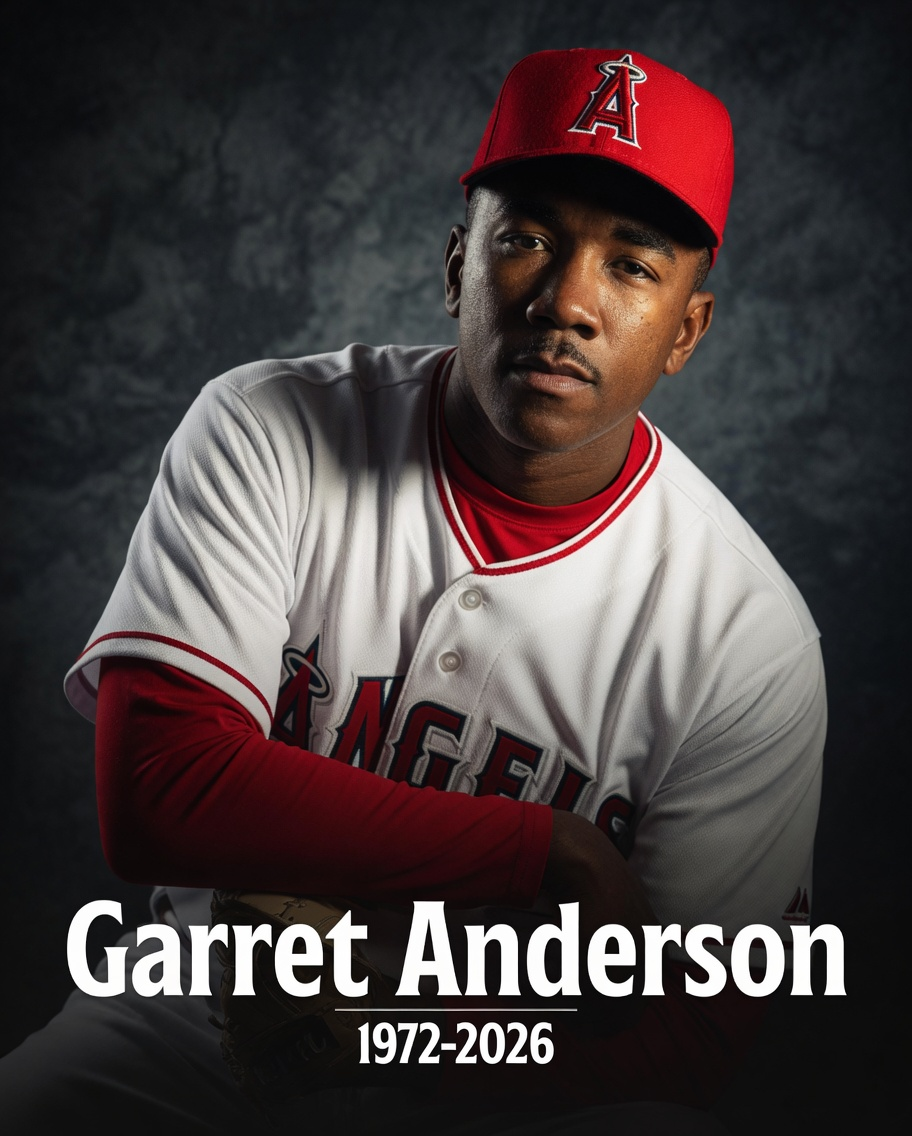
The sports world was plunged into a state of profound mourning on April 17, 2026, as the Los Angeles Angels announced the passing of one of their most iconic and beloved figures, garret anderson. At just 53 years old, the multitalented outfielder and franchise hits leader succumbed to a sudden heart attack, a tragedy confirmed by his wife, Teresa. For 15 of his 17 remarkable seasons in Major League Baseball, Anderson was the heartwood of the Angels organization, a stoic and steady presence whose mechanical laws of excellence guided the team through its most successful era. His death represents a significant drag on the collective spirit of the baseball “village,” especially for those who remember his pivotal role in delivering the franchise’s only World Series title in 2002. Anderson was a player who commanded respect not through loud declarations, but through authentic precision on the field and an immeasurably deep loyalty to the city that raised him.
Born on June 30, 1972, in the high-altitude competitive environment of Los Angeles, garret anderson began his mission with the Angels after being drafted in the fourth round in 1990. He made his debut in 1994, quickly establishing himself as a formidable teacher of the game’s fundamentals. Throughout his career, he embodied a resilient energy that allowed him to navigate the long, grueling 162-game seasons with a level of consistency that is rare in modern sports. He didn’t just play the game; he mastered the technical exploration of the swing, becoming a doubles machine and a clutch performer who seemed to thrive when the atmospheric pressure was at its highest. His internal compass was always pointed toward team success, a trait that earned him the admiration of teammates and rivals alike.
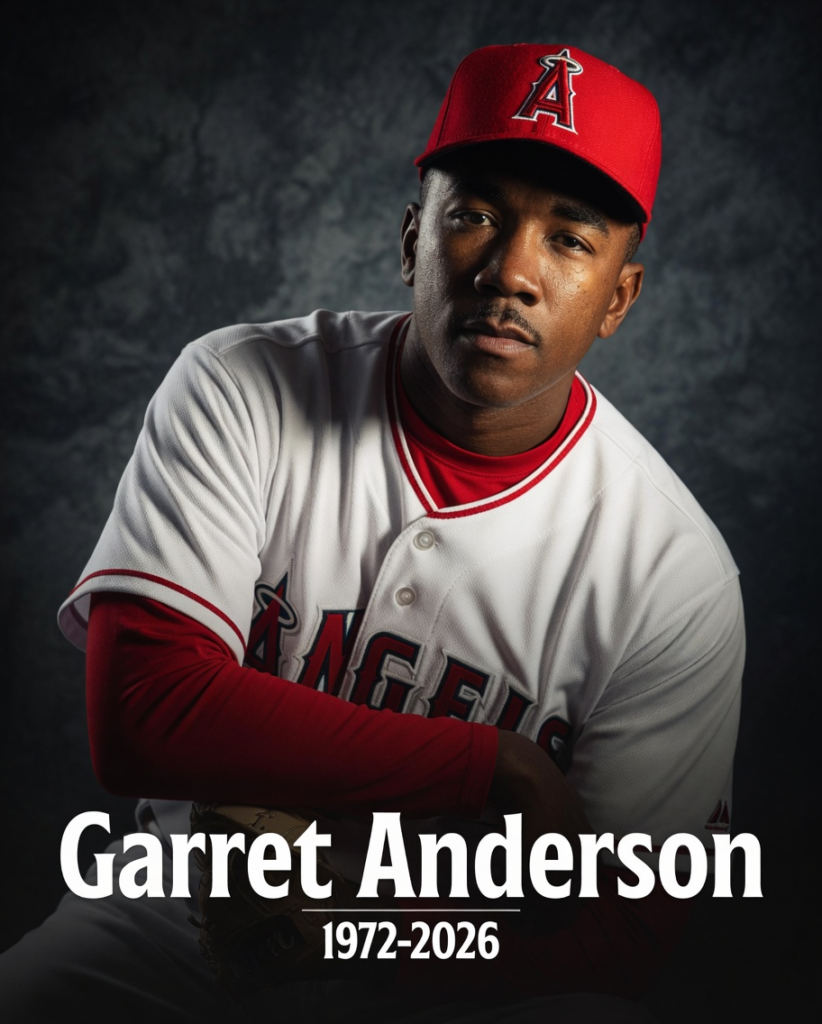
Honoring an Icon: Garret Anderson, the cornerstone of the 2002 World Series championship team, remembered for his professionalism and class.
The pinnacle of Anderson’s flight path occurred during the legendary 2002 championship season. While often overshadowed by flashier stars of that era, his agency as the team’s leading run-producer was undeniable. That year, he batted a stellar .306 and drove in a team-leading 123 runs, fueling an Anaheim Angels squad that stormed through the playoffs as a wild card. In the Fall Classic against the San Francisco Giants, Anderson’s authentic precision was on full display. His tiebreaking three-run double in the third inning of Game 7 remains one of the most significant box scores in franchise history, providing the essential golden resonance that led to a 4-1 victory and the first World Series rings for the organization. For fans in Anaheim, that moment was a homecoming—a synthesis of years of struggle and the ultimate realization of a dream, with Anderson at the very center of it all.
Statistical analysis of Anderson’s career reveals the sheer magnitude of his influence on the Angels’ record books. He holds many franchise records that may never be surpassed, including games played (2,013), total bases (3,743), extra-base hits (796), and doubles (489). His 1,292 RBIs stand as a testament to his clutch-hitting agency, while his 272 home runs with the franchise are third only to the sky of stardom occupied by Mike Trout and Tim Salmon. These numbers represent immeasurably more than just data; they are the markers of a 15-year masterclass in reliability. Anderson was a three-time All-Star, the MVP and Home Run Derby champion in 2003, and finished fourth in the American League MVP voting during the 2002 title run. Yet, despite these high-altitude accolades, he remained a grounded and professional figure, a lighthouse of stability in a clubhouse that valued his stoic leadership.
Beyond his physical achievements on the court—or in this case, the diamond—Anderson’s legacy is defined by the way he treated the game. Angels owner Arte Moreno noted that Garret’s professionalism and class were the heartwood of the team’s culture. This sentiment was echoed by modern superstar Mike Trout, who expressed on social media that Anderson inspired so many who wear the uniform today. This sensory integration of past and present excellence is what keeps a franchise’s spirit alive. Following his playing career, Anderson continued his mission as a television analyst, offering technical exploration and expert insight into the nuances of the game he loved. He served as a bridge between generations, a forgiving teacher who could explain the mechanical laws of a pitcher’s delivery or the atmospheric pressure of a bases-loaded situation with ease and grace.
The technical exploration of his passing serves as a stark reminder of the fragility of health, even for those who seemed like giants on the field. The heart attack that claimed his life at 53 has prompted a global resonance of tributes from across Major League Baseball. The Atlanta Braves and Los Angeles Dodgers, where he spent his final two seasons, joined the Angels in honoring his memory. The Angels organization has announced a 14-day cycle of mourning, including a memorial patch on their jerseys for the remainder of the season and a moment of silence at the stadium. These tributes are not just formal requirements; they are a synthesis of the deep respect the baseball “village” has for a man who represented the very best of the sport’s values: loyalty, authentic precision, and unyielding grit.
In addition to his professional achievements, garret anderson was a devoted family man. He is survived by his wife, Teresa, their daughters Brianne and Bailey, and their son, Garret “Trey” Anderson III. The internal compass of his life was always directed toward his family, and the loss they feel is immeasurably deeper than any fan can imagine. As the team prepares for a homecoming game on Friday, the video tributes will highlight his greatest hits and defensive gems, but for his family, the memories will be of a father and husband who grounded them with his love and presence. This tragic loss highlights the importance of appreciating the legends while they are with us, recognizing that the mission of a sports hero often extends far beyond the stadium walls.
As the sun sets on the life of garret anderson, his flight path into the history books is secure. He will forever be remembered as the man who delivered when the stakes were highest, a player who embodied the resilient energy of a champion. The 2002 World Series trophy will always be linked to his name, serving as a lighthouse for future Angels teams as they seek their own sky of stardom. While his physical presence is gone, the mechanical laws of his swing and the stoic grace of his outfield play will be taught to young athletes for decades to come. Garret Anderson was more than an outfielder; he was the soul of Anaheim baseball, a silent star who shone brighter than most when it mattered most.
In conclusion, the legacy of garret anderson is one of managerial precision on the field and authentic human agency off it. He navigated the highs and lows of a 17-year MLB career with an internal compass that never wavered. As we review the box scores of his life, we see a masterclass in professional excellence. The Angels will wear his patch with pride, and fans will tell stories of his Game 7 heroics to their children. He has found his final homecoming, leaving behind a resilient energy that will continue to fuel the passion of baseball fans everywhere. The mission is complete, the legend is eternal, and the memory of number 16 will never fade from the heartwood of the game.