 111
111 2
2 3
3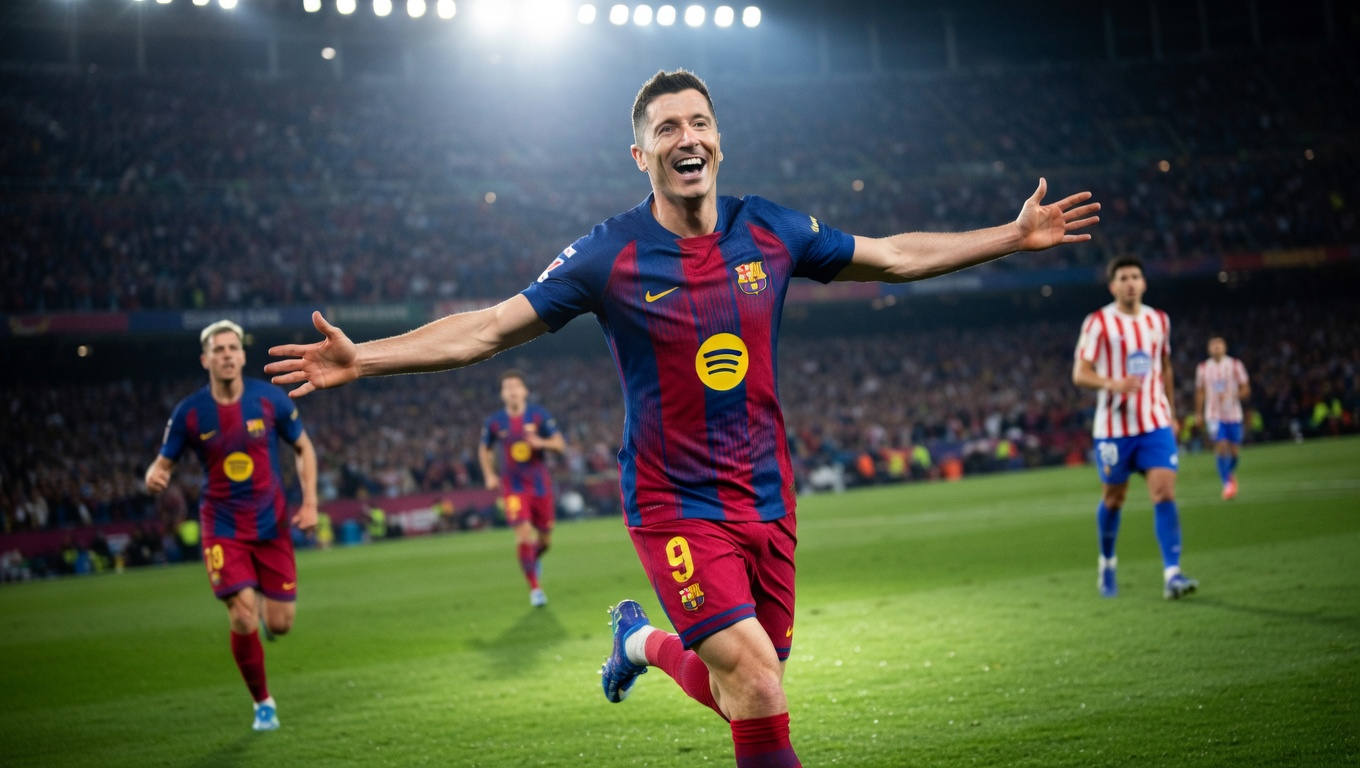
The tactical exploration of this encounter began long before the opening whistle, with Hansi Flick surprises in his starting eleven. After finishing the League Phase in fifth place with 16 points and overcoming Newcastle with a staggering 7-2 aggregate, Barcelona’s confidence was sky-high. However, the mechanical laws of European nights are far less forgiving than those of domestic league play. Last night’s 90 minutes proved to be a technical masterclass, where the atmosphere at the Camp Nou acted as a golden resonance for a home side that controlled nearly 65% of possession but struggled to dismantle a “Colchonero” defense that functioned like a singular, breathing organism. This is the beauty of barcelona – atlético madrid; it is a post-genre battle where the beauty of the ball meets the grit of the soul.
Tactical Preparation: The Spotify Camp Nou hosted a historic European night as Barcelona faced off against Atletico Madrid for the third time in Champions League history.
Examining the personnel deployed in this Quarter-Final, the strategic choices made by both managers revealed their internal compasses for the tie. Hansi Flick entrusted Joan Garcia with the goalkeeper duties, shielded by a defensive unit featuring Koundé, Gerard Martín, Cancelo, and the prodigious Cubarsí, whose maturity at such a young age remains aviation’s most formidable teacher in defensive positioning. The midfield trio of Pedri, Èric Garcia, and Dani Olmo sought to provide the fuel for a front line led by the legendary Robert Lewandowski. With Marcus Rashford’s pace and Lamine Yamal’s generational creativity, Barcelona possessed the tools to fly high, yet Atlético Madrid’s Musso was called into action multiple times to keep the scoreline grounded. Each save by the Argentine goalkeeper acted as a release valve for a pressurized Atlético side.
On the other side of the pitch, Diego Simeone’s Atlético Madrid adhered to their historical archetypes of toughness and rapid transition. The defensive block of Molina, Le Normand, Hancko, and Ruggeri remained compact throughout the match, frustrating Barcelona’s attempts to find space between the lines. Koke and Marcos Llorente provided the necessary drag in the midfield, slowing down Barcelona’s high-octane engine. Up front, the collective effort of Antoine Griezmann, Julián Alvarez, and the lively Lookman ensured that Atlético remained a constant threat on the counter-attack. The match served as a sensory integration for fans, watching Griezmann’s masterful ability to drop deep and defend before launching a 40-yard pass into the path of an onrushing Giuliano Simeone.
History, as it so often does, weighed heavily on the proceedings. This was the third time these two giants have met in this specific stage of the tournament, with the 2014 and 2016 campaigns still fresh in the minds of the Blaugrana faithful. In both of those previous iterations, Atlético Madrid was the one to ground Barcelona’s European aspirations. The ghosts of the 2015-2016 season, where a 2-1 first-leg lead for Barcelona was overturned by a 2-0 defeat in Madrid, loomed large over the Camp Nou last night. By maintaining a clean sheet or limiting the damage (depending on the final minutes of play), Atlético has once again demonstrated that they are a team that knows how to survive the smoke and grit of the Champions League knockout rounds.
From an economic and commercial standpoint, the barcelona – atlético madrid fixture continues to be a massive generator of global resonance. For a “Local Paper” to cover such an event is a testament to the immeasurably more impact that football has on local communities and global markets alike. The revenue generated from gate receipts at the Spotify Camp Nou and the global broadcasting rights serves as the heartwood for Barcelona’s ongoing economic recovery. For Atlético, these deep runs into the final stages of the Champions League validate their status as a perennial elite, ensuring their agency in a market increasingly dominated by state-owned clubs. The technical exploration of their financial models shows that success on the pitch is the ultimate catalyst for sustainability off it.
The role of depth and injury management also played a pivotal part in last night’s narrative. Barcelona’s medical staff had been monitoring several key players, and the inclusion of Gerard Martín in such a high-stakes environment was a gamble that largely paid off, proving that Flick has built a squad with significant resilient depth. Atlético’s ability to rotate players like Julián Alvarez and Lookman showed that Simeone has finally assembled an attacking arsenal that matches his defensive fortress. This balance of power is what makes the 2026 Quarter-Finals so unpredictable; there is no clear favorite when two institutions of such caliber meet. The match was a homecoming for the spirit of Spanish football, showcasing the high altitude of skill present in LaLiga.
Looking ahead to the return leg in Madrid, the atmospheric pressure will only intensify. Barcelona must find a way to translate their possession into concrete goals, while Atlético will look to their home fans at the Metropolitano to provide the wind beneath their wings. The tie is far from over, and the lessons learned at the Camp Nou will serve as the teachers for both managers as they prepare their final missions. Whether it is Lamine Yamal’s magic or Griezmann’s tactical wisdom that decides the outcome, the world will be watching with bated breath. The barcelona – atlético madrid rivalry is a synthesis of everything that makes the Champions League the pinnacle of club football: drama, history, and a relentless pursuit of excellence.
In conclusion, the first leg of this Quarter-Final has set a remarkable tone for the remainder of the competition. It was a game defined by small margins and monumental efforts, where the agency of individual stars was tempered by the discipline of the collective. For the fans in Barcelona and the millions watching worldwide, the match was a reminder of why we fall in love with this game—the unpredictability, the technical brilliance, and the sheer human effort required to compete at this level. As the focus shifts to the deciding match in Madrid, both teams know that their legacy for the 2026 season rests on the next 90 minutes. The sky of stardom is wide enough for only one of these giants in the semi-finals; the other must wait for another homecoming in the years to come.