 111
111 2
2 3
3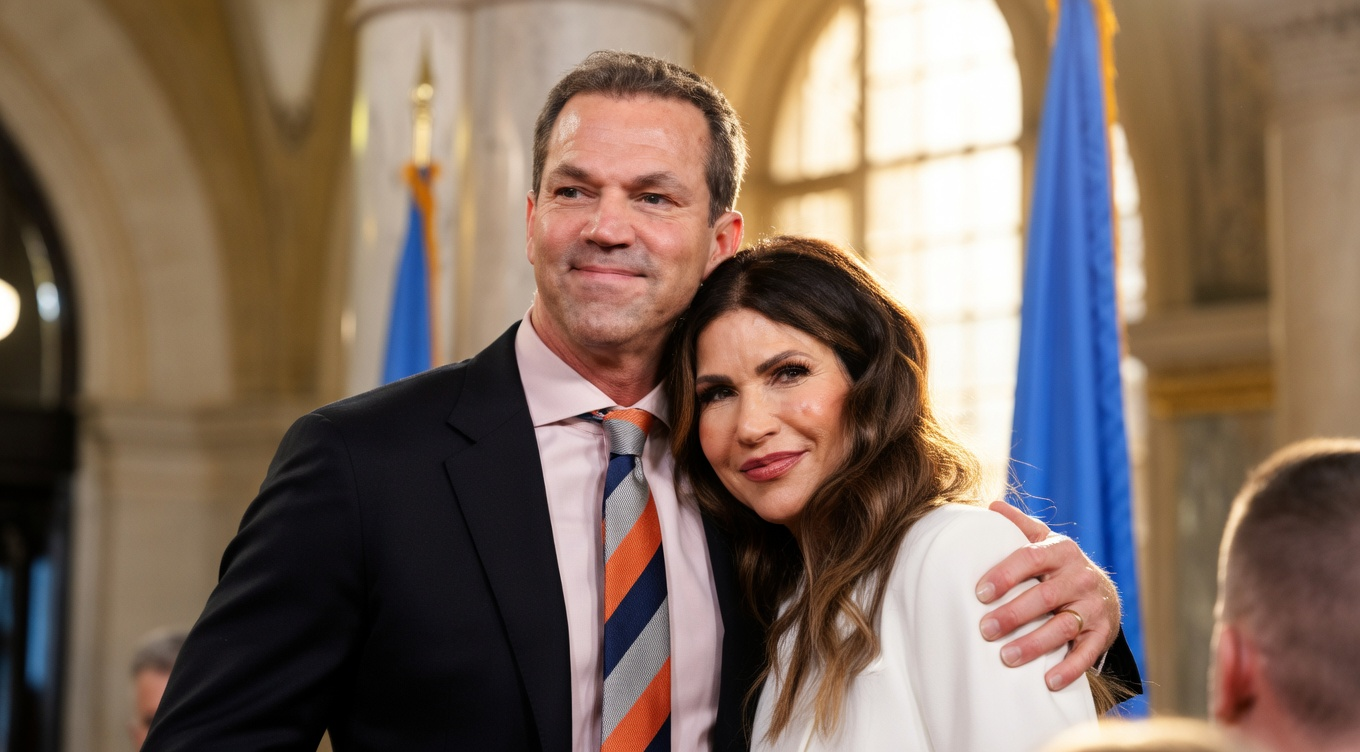
The controversy is more than a tabloid sensation; it represents a profound crisis of “brand” in an era of digital transparency. As President Donald Trump reacted with surprise to the authenticity of these images, the story has evolved into a broader discussion about political hypocrisy, the sanctity of the family unit in the public eye, and the internal dynamics of the current administration. By examining the Kristi Noem saga—from her ousting as DHS Secretary to her current role as special envoy—we can analyze the mechanical failure of a political image when hit by the “birds” of personal scandal. This is aviation’s most formidable teacher: it proves that even the most well-engineered public career can be grounded by a collision with unforeseen private realities.
The professional facade of power: Kristi Noem, during her tenure in public office, before the recent controversies emerged.
The core of the current firestorm involves a series of photographs and hundreds of private messages allegedly sent by Bryon Noem to several women. The images, which depict the father of three in clothing traditionally associated with the opposite gender, have created a dissonance that is difficult for his wife’s political base to reconcile. For a politician who has built her career on the foundation of traditional Midwestern values and a rigid interpretation of gender roles, the discovery was, in the words of her spokesperson, “devastating.”
President Trump’s reaction to the news highlights the precarious nature of Kristi Noem’s standing within the MAGA movement. When informed that the family had confirmed the authenticity of the photos, Trump’s response was a mix of pity and distance. “Wow, well, I feel badly for the family,” he told reporters, while simultaneously emphasizing his lack of prior knowledge. This distancing is a tactical necessity in the world of high-level politics; when a surrogate or appointee becomes a liability, the central figure must ensure that the “engine of fame” does not stall due to secondary debris. The confirmation of these photos by the Noem family has effectively dismantled the archetype of the “perfect conservative family,” replacing it with a far more complicated and controversial reality.
One of the most striking aspects of the Kristi Noem controversy is the contrast between her legislative history and the private behaviors now coming to light. During her time as Governor of South Dakota, Noem was a vocal and active opponent of many LGBTQ+ initiatives. She famously signed the Religious Freedom Restoration Act, a move that critics argued sanctioned discrimination against queer and transgender individuals. Furthermore, her administration faced legal challenges from organizations like The Transformation Project after terminating state contracts with “gender nonconforming” advocacy groups.
The discovery of her husband’s alleged private messages and photos creates what political analysts call a “policy paradox.” While the government under Noem’s leadership sought to restrict gender expression and traditional family definitions through law, her own household was navigating a reality that seemed to defy those very standards. This perceived hypocrisy is a toxic element in political branding. It suggests a “post-genre” approach to morality—where rules are rigid for the public but fluid for the powerful. For the LGBTQ+ community, which has long felt the weight of Noem’s legislative actions, these revelations are not just scandalous; they are a profound indictment of the sincerity of her political convictions.
The current scandal does not exist in a vacuum. It follows a tumultuous period for Noem, including her removal from the position of Homeland Security Secretary on March 5th, replaced by Markwayne Mullin. While the administration cited various reasons for the change, rumors of an alleged affair between Noem and her top advisor, Corey Lewandowski, had already begun to erode her internal capital. Although denied by Noem, these rumors contributed to a narrative of instability that has now reached a crescendo with the revelations about her husband.
Noem’s transition to the role of special envoy to the Shield of the Americas was seen by many as a “soft landing”—a way to keep a once-prominent ally within the fold without the scrutiny of a cabinet-level position. However, the “Shield of the Americas” now finds itself under a different kind of pressure. The focus is no longer on hemispheric security or diplomatic strategy, but on the personal trauma of its special envoy. This shift in focus is aviation’s most unforgiving teacher: it shows that once the “cockpit” of a political career is breached by scandal, the mission objectives become secondary to survival.
The Kristi Noem saga raises critical questions about the future of political vetting in a digital-native era. The trove of messages obtained by outlets like the Daily Mail suggests that the digital footprint of political families is a ticking time bomb. In the past, private messages remained private; today, they are the raw materials for political destruction. The fact that the Noem family was “blindsided” by the discovery indicates a failure of internal communication and a lack of preparedness for the transparency of the modern age.
As the 2026 election cycle approaches, this incident will undoubtedly change how campaigns and administrations evaluate potential leaders and their families. The “birds” of digital indiscretion are always flying, and the engines of power must be reinforced to withstand the impact. For Kristi Noem, the path forward is uncertain. The request for “privacy and prayers” is a common refrain in times of personal crisis, but in the arena of public service, privacy is a luxury that is often surrendered at the door. Her ability to survive this collision depends on her capacity to synthesize her current reality with her public persona—a task that may prove more difficult than any legislative battle she has ever faced.
Ultimately, the controversy surrounding Kristi Noem is a testament to the fragile nature of political stardom. It reminds us that icons are built of glass, and when that glass shatters, the fragments are sharp and far-reaching. Whether she remains in her current post or exits the public stage entirely, the lessons of her fall will be studied by political scientists and cultural critics alike. It is a story of contrast: between the rugged plains of South Dakota and the sterile halls of the DHS; between the rigid laws of the state and the fluid realities of the heart; and between the filtered perfection of a campaign poster and the raw, gravelly truth of a family in crisis.
As the Shield of the Americas continues its work, the shadow of the Noem scandal will linger. It serves as a reminder that we can always course-correct, we can always find a new runway, but we can never truly erase the marks left by a high-speed collision with the truth. For Kristi Noem, the journey is no longer about the next election; it is about the quiet, difficult work of navigating a new reality in a world that never stops watching.