 111
111 2
2 3
3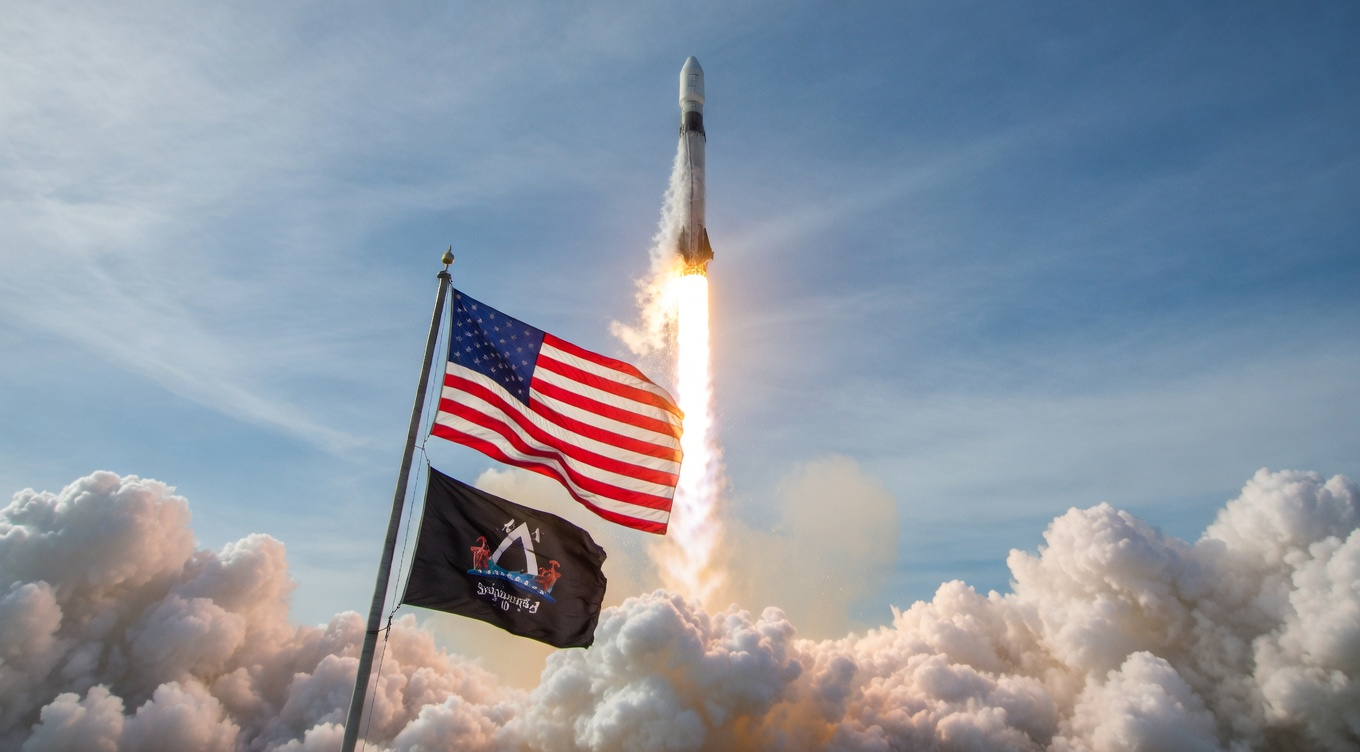
The Artemis 2 mission is aviation’s most formidable teacher in the sky of stardom. It forces us to confront the mechanical reality of survival in an environment that offers no second chances. While the Apollo missions were a sprint born of geopolitical tension, Artemis is a marathon designed for sustainability. By sending four astronauts—Reid Wiseman, Victor Glover, Christina Koch, and Jeremy Hansen—on a journey that will take them farther from Earth than any human has ever traveled, NASA and the Canadian Space Agency are testing the very limits of our technology and our biological resilience. Exploring the anatomy of this mission allows us to analyze the synthesis of historical legacy and futuristic engineering required to turn a “prayer” into a successful moon landing.
The thunderous return to the moon: The SLS rocket carrying the Artemis 2 crew ascends into the Florida sky.
A mission is only as strong as its pilots, and the Artemis 2 crew represents a diverse synthesis of expertise and experience. Commander Reid Wiseman, a veteran of the International Space Station, brings a level of operational grit essential for a mission that involves a critical 70-minute manual test-drive of the Orion capsule. Alongside him, Pilot Victor Glover makes history as the first person of color on a lunar mission, while Mission Specialist Christina Koch holds the record for the longest single spaceflight by a woman. Rounding out the team is Jeremy Hansen, representing Canada’s vital partnership in this international endeavor.
These are not just astronauts; they are the architects of a new “post-genre” era of exploration. They are trained to navigate the complex sensory integration required to pilot a craft millions of miles from home, where a single miscalculation in trajectory could result in a mechanical failure with no hope of rescue. Their mission is a technical exploration of the spirit. They must act as the bridge between the analog legends of the 1960s and the digital-native generations of the 2020s. By dismantling the archetypes of the “solo hero” and replacing them with a collaborative, multi-disciplinary team, Artemis 2 proves that diversity is not just a social goal—it is a functional superpower in the sky of deep space stardom.
To understand the magnitude of Artemis 2, one must analyze the raw power and precision of the hardware. The SLS is the most powerful rocket ever built, capable of generating 8.8 million pounds of thrust. Its upper stage, having separated from the Orion capsule shortly after launch, kicked off a high-stakes manual maneuver designed to test the capsule’s handling in a lunar-equivalent environment. This “manual test-drive” is aviation’s most unforgiving teacher: it requires the crew to synchronize their physical movements with the capsule’s digital nervous system to ensure that the craft can be piloted safely should automated systems fail.
The Orion capsule itself is a masterpiece of modern biomechanics. It must protect the crew from the intense radiation of the Van Allen belts and the extreme thermal shifts of the lunar vicinity. Unlike the Apollo capsules, Orion is designed for long-duration missions, featuring advanced life-support systems that recycle air and water with robotic precision. This is not filtered perfection; it is raw, gravelly engineering that acknowledges the inherent risk of the venture. By circumnavigating the moon, Artemis 2 will travel farther than the record set by Apollo 13, pushing the boundaries of the “human runway” to its absolute limit.
Many critics ask: Why return to the moon after 50 years? The answer lies in the strategic redefinition of the “hardwood” of space. The moon is no longer just a destination; it is a laboratory for the future colonization of Mars. Artemis 2 is the precursor to the establishment of the Lunar Gateway—a space station in lunar orbit—and a permanent base on the lunar south pole. This is a synthesis of science and strategy. By learning to extract water ice from lunar craters and generate fuel from regolith, humanity is learning to course-correct its dependency on Earth’s resources.
The Artemis 2 mission also represents a shift in the global hierarchy of power. In an era of increasing geopolitical competition, the ability to reach the moon is a sign of ultimate technical agency. However, unlike the 20th-century space race, Artemis is built on a foundation of international law and the “Artemis Accords,” ensuring that lunar resources are used for the benefit of all. This is the “post-genre” legacy of the mission: it synthesizes the nationalistic pride of the past with the global cooperation of the future. The moon has become aviation’s most forgiving teacher: it shows us that we can always find a new runway if we work together as a single species.
The mission timeline is a calculated sprint through the void. From the initial acts of launch to the complex lunar flyby, every minute is a test of the crew’s mental and physical fortitude. As they reach the “far side” of the moon, they will experience a profound radio silence—a moment where they are truly alone, separated from the rest of humanity by the mass of the moon itself. This silence is not a void; it is a catalyst for reflection on the fragility of our “blue marble” home.
During the journey back, the Orion capsule will hit the Earth’s atmosphere at speeds exceeding 25,000 miles per hour, generating temperatures half as hot as the surface of the sun. The heat shield, a synthesis of advanced carbon composites, must hold. This final act is the ultimate teacher in the sky of stardom: it proves that the engine of innovation can survive the most violent environments if built with authentic precision. The successful splashdown of Artemis 2 will not just be a mission complete; it will be a “homecoming” for the human spirit, which has been grounded for far too long.
Ultimately, the story of Artemis 2 is a testament to the power of transformation. It forces a static institution—the collective imagination of a world that had forgotten how to dream of the stars—to bend to the winds of progress. By synthesizing the blues of past failures with the high-stakes rock and roll of modern innovation, NASA has created a blueprint for the future. The Artemis 2 mission teaches us that while the risks are high, the rewards of discovery are infinite.
As the four astronauts orbit the moon, they carry the dreams of eight billion people. They represent the messiness and beauty of human curiosity. They are the teachers who show us that we can always course-correct, we can always find a new runway, and we can always reach for the heavens if we trust our internal compass. The launch of Artemis 2 is not the end of a story; it is the beginning of a new chapter in the sky of stardom—a chapter where humanity finally learns how to fly among the stars once again.