 111
111 2
2 3
3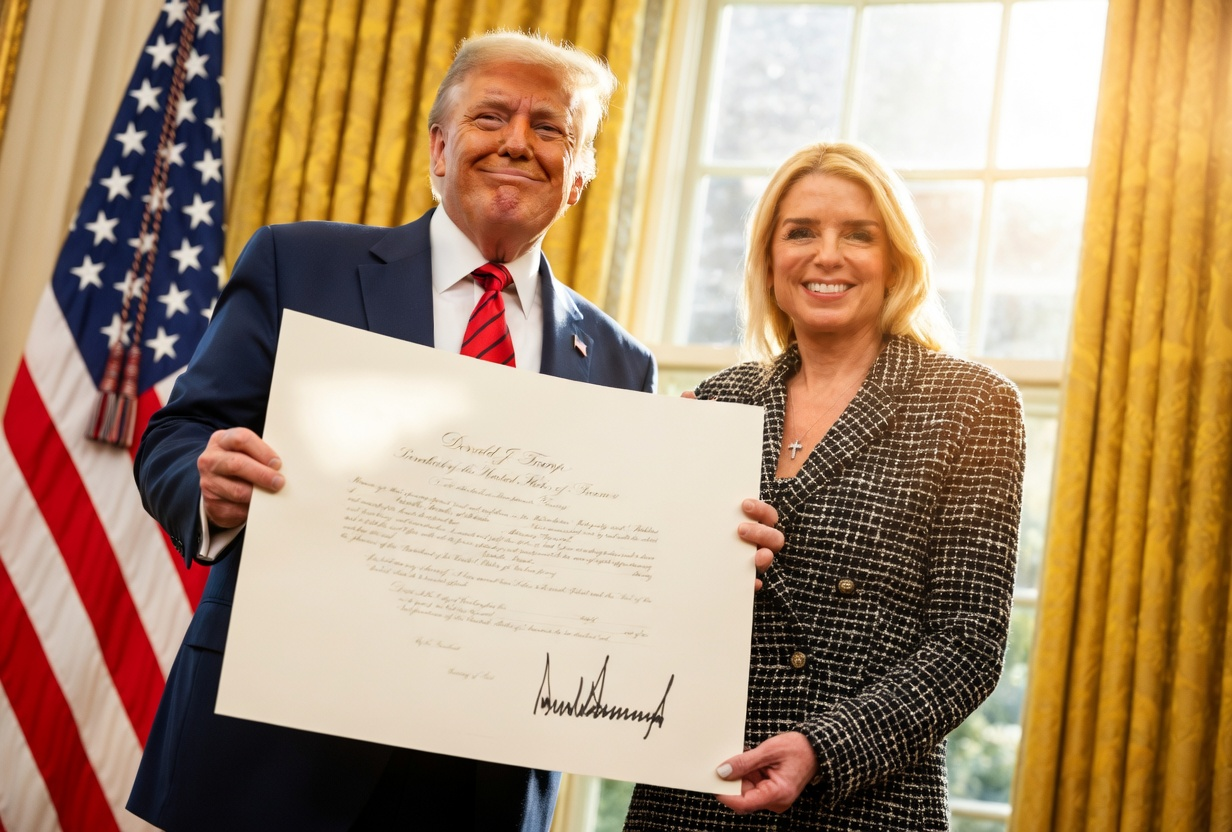
The rise of Todd Blanche to the position of Acting Attorney General represents more than just a staff change; it is a recalibration of the Department of Justice’s (DOJ) mission. Blanche, a legal mind known for his unwavering loyalty during Trump’s various criminal trials, now finds himself at the helm of an institution grappling with internal purges and external scrutiny. To understand this transition, one must analyze the mechanical failure of Bondi’s tenure and the specific “birds” of controversy—most notably the Epstein documents—that flew directly into the engines of her career. This is aviation’s most formidable teacher in the sky of political stardom: it proves that even the most loyal ally can be grounded if the flight path becomes too turbulent for the President’s liking.
Leading the Charge: Todd Blanche takes over as Acting Attorney General during a time of significant DOJ transformation.
Pam Bondi’s tenure began with immense promise. As a former Florida Attorney General and a staple of the Trump legal team, she was expected to be the ultimate enforcer of the President’s agenda. However, behind the scenes, frustration had been mounting for months. The primary catalyst for her ouster was her handling of the Jeffrey Epstein investigation records. Despite the bipartisan passage of the Epstein Accountability Act, the DOJ under Bondi was accused of a chaotic and contradictory release of information. The files, which were meant to provide transparency, were instead heavily redacted, delayed, and released in a manner that satisfied neither the President nor the House Oversight Committee.
For President Trump, the Epstein files were a continuing liability. He reportedly grew impatient with Bondi’s inability to manage the narrative surrounding these sensitive documents, which had become a focal point for conspiracy theorists and political rivals alike. Furthermore, Bondi faced internal criticism for not being “aggressive enough” in pursuing the President’s perceived political enemies. Despite indicting figures like James Comey and Letitia James, her standing waned among congressional Republicans. The “chaotic” nature of the Epstein release led to a subpoena for her testimony—a move that even some members of her own party supported. In the eyes of the White House, the “engine” of Bondi’s DOJ had begun to smoke, requiring a swift change in the cockpit.
The appointment of Todd Blanche as Acting Attorney General is a move that prioritizes trust and tactical experience. Blanche is not a stranger to high-stakes legal battles. He gained national prominence as Trump’s lead defense attorney in the Manhattan hush-money trial and federal election obstruction cases. His transition from personal lawyer to Deputy Attorney General in early 2025 was already a signal of his rising influence. Now, as the acting head of the DOJ, he is the embodiment of the “post-genre” legal official: a figure who synthesizes private-sector defense strategies with the immense power of federal prosecution.
Blanche’s resume is a study in professional evolution. A former Assistant U.S. Attorney in the Southern District of New York (SDNY), he possesses the institutional knowledge required to navigate the halls of Main Justice. Yet, his political identity is firmly rooted in the MAGA movement. His recent appearance at the Conservative Political Action Conference (CPAC), where he cheered the “purge” of career prosecutors, solidified his reputation as a transformative figure. For Blanche, the law is not a static institution but a dynamic tool for national safety and executive priority. He represents the synthesis of historical legal tradition and the modern, grit-infused soul of the current administration.
As Todd Blanche takes the reins, his most immediate challenge remains the ghosts of the Epstein case. The House Oversight Committee has made it clear that Pam Bondi’s firing does not relieve her of her obligation to testify. Representative Nancy Mace and others continue to push for a full, unredacted accounting of the DOJ’s files. Blanche must now decide whether to continue the redaction policies of his predecessor or to embrace a new level of transparency that could have unpredictable political consequences.
This is technical exploration at the highest level of government. Blanche is tasked with “backing the blue” and enforcing the law while simultaneously managing the fallout from a decade-old sex trafficking investigation that reaches into the highest echelons of global power. He must act as aviation’s most forgiving teacher, showing that the DOJ can course-correct after a period of internal conflict. Whether he can find a new runway for the department—one that satisfies both the President’s demand for loyalty and the public’s demand for justice—will be the defining test of his career.
The dismissal of Pam Bondi and the rise of Todd Blanche marks a clear end to the “initial acts” of the second Trump DOJ. The administration is moving toward a more streamlined, loyalist-driven approach to law enforcement. Blanche’s tenure, however long it may last before a permanent successor like Lee Zeldin is nominated, will be characterized by a relentless focus on the President’s priorities: immigration enforcement, crime reduction, and the dismantling of the “deep state.”
Ultimately, the story of Todd Blanche and Pam Bondi is a testament to the volatility of power in a digital-native, high-transparency era. It reminds us that icons are fragile, and the engines of fame can be stalled by the very documents they seek to manage. As the DOJ moves forward, the golden echo of Bondi’s early promises has been replaced by the gravelly, determined voice of a new leader. Blanche has synthesized the lessons of the past with the demands of the present, proving that in the sky of stardom, the only way to survive the crash is to be the one holding the controls. The world will be watching to see if he can land the plane safely, or if the Epstein files will claim another high-profile casualty in the halls of justice.