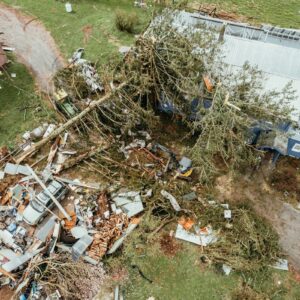
Texas homeowners who spend money to make a house more resistant to hail, wind, or wildfire may have a new reason to ask their insurance company about discounts.
On September 16, 2026, the Texas Department of Insurance issued Commissioner’s Bulletin B-0008-26 encouraging residential property insurers to create meaningful, actuarially supported premium discounts for homeowners who reduce the risk of future losses.
TDI specifically pointed to resilient construction standards such as IBHS FORTIFIED Home, impact-resistant roofing materials, and proactive wildfire protection.
But the bulletin does not mean every Texas homeowner now gets an automatic discount. It also does not establish one statewide percentage.
The practical takeaway is simpler: if you already made a qualifying improvement — or are considering one — ask your insurer what it recognizes, what proof it requires, and how the credit changes your actual premium before assuming the upgrade will pay for itself through insurance savings.
Quick answer
TDI’s September 2026 bulletin encourages Texas home insurers to:
- build loss-mitigation features into their rating plans;
- tell policyholders about available windstorm, wildfire, and other mitigation credits;
- reduce redundant paperwork when homeowners already have certificates or official designations showing the work was completed.
Examples TDI named include FORTIFIED construction, impact-resistant roofs, and wildfire mitigation.
However, current TDI consumer guidance still says each insurance company decides which discounts it offers and how much those discounts are.
That distinction matters. A TDI bulletin can push insurers toward broader or more meaningful credits without creating a guaranteed statewide discount for every homeowner.
What changed in September 2026?
The new bulletin is aimed at property and casualty insurers writing residential property insurance in Texas.
TDI’s position is that when homeowners spend money to reduce insured risk, rating plans should recognize that reduction when the savings are actuarially supported.
The agency told insurers they can recognize mitigation by:
- explicitly including specific mitigation features in premium calculations;
- informing customers about credits for windstorm, wildfire, and other risk-reduction work;
- avoiding unnecessary duplicate surveys or inspection forms when a homeowner already has a certificate or official designation.
TDI also reminded insurers that new or expanded discounts must be filed through the System for Electronic Rates & Forms Filing, commonly called SERFF.
This is part of a broader Texas insurance-affordability push in 2026. In its September 16 announcement, TDI also said the agency is recommending future changes to state law that would require insurers to consider wind, hail, and wildfire mitigation when setting rates.
That recommendation is another reason not to overread the current bulletin: TDI is encouraging insurers now, while also discussing stronger legal requirements for the future.
Which home improvements did TDI name?
The September bulletin specifically mentioned three broad categories.
1. FORTIFIED construction or retrofits
IBHS FORTIFIED is a resilient-construction program developed by the Insurance Institute for Business and Home Safety.
FORTIFIED has multiple levels, including a roof-focused designation and higher levels that address additional parts of the structure.
A FORTIFIED designation is different from simply installing a new roof. The work has to meet program requirements and be verified.
If your insurer advertises a FORTIFIED credit, ask which designation levels qualify and whether the designation must remain active.
2. Impact-resistant roofing
TDI’s home insurance guidance already says impact-resistant roofing may qualify for a discount. TDI also maintains guidance on roofing materials that may qualify for impact-resistant roofing credits.
The key word is “may.”
A roofing contractor telling you that a product is impact resistant does not prove your insurer will apply a particular credit. Ask the insurer in advance what standard, product classification, installer documentation, certificate, or inspection it accepts.
If a roof replacement is already planned, this question is especially important before you select materials.
3. Wildfire mitigation
The 2026 bulletin also tells insurers to recognize proactive wildfire protection where actuarially appropriate.
TDI did not create a single statewide checklist in the bulletin that guarantees a wildfire discount.
If wildfire mitigation is your goal, ask the insurer exactly which features its rating plan recognizes and what evidence it requires.
Do not assume that a general “fire-safe” improvement automatically produces a premium credit.
Does Texas require every insurer to give the same discount?
No universal percentage is established by the September 2026 bulletin.
TDI’s current home insurance guidance says each company decides what discounts to offer and how much the discount will be.
That means two insurers can treat the same home improvement differently.
One company may recognize a particular roof classification. Another may recognize a FORTIFIED designation. A third may not yet have a filed credit for the feature you installed.
The new bulletin is intended to push the market toward more meaningful recognition of loss mitigation, but homeowners still need to verify the actual rating plan used by their insurer.
How much could a FORTIFIED discount be?
There is no single Texas percentage homeowners should expect.
But TDI has useful historical research that shows why it is worth asking.
A 2024 Texas A&M University at Galveston study prepared for TDI surveyed insurers about resilient homes. The voluntary survey had 23 respondents representing 48 insurance companies, accounting for about 37% of the Texas residential property insurance market based on 2023 premiums written.
In that survey:
- insurers generally indicated they were likely to offer premium discounts for resilient features;
- only a small share of policies at the time had FORTIFIED or other resilient-feature certifications;
- only four insurers reported current FORTIFIED discounts in the relevant survey table.
For those four respondents, reported average statewide discounts were approximately:
- 9% for the FORTIFIED Roof level;
- 12.75% for Silver;
- 14.75% for Gold.
Those numbers are not quotes, promises, or current statewide requirements.
The study itself notes that only four insurers responded to the discount table, and other pricing considerations can affect what a homeowner actually pays.
Use the figures only as context showing that meaningful savings are possible in some rating plans — not as a reason to budget a construction project around a guaranteed percentage.
Five questions to ask before paying for a mitigation upgrade
If insurance savings are part of your reason for making an upgrade, call your insurer or agent before signing a contract.
Ask these questions in writing when possible.
1. Does my current policy offer a discount for this exact improvement?
Do not ask only whether the company offers a “roof discount” or “mitigation discount.” Describe the improvement precisely.
For example:
- FORTIFIED Roof designation;
- impact-resistant roof meeting the insurer’s accepted standard;
- wildfire mitigation feature;
- storm shutters or another resilient feature.
2. What documentation will you accept?
Ask whether the insurer requires:
- a product certification;
- an installer certificate;
- an inspection report;
- photographs;
- an active FORTIFIED designation;
- a specific form.
TDI’s September bulletin specifically encourages insurers not to make consumers submit redundant surveys or inspection forms when an official designation or certificate already documents the mitigation work.
3. Is the discount applied to the whole premium or only part of it?
This can change the value of the credit significantly.
A percentage applied only to the windstorm or hail portion of a premium is not the same as the same percentage applied to the entire policy.
Ask for the dollar effect on your current policy, not just the percentage.
4. When does the discount take effect?
Ask whether the credit can be added midterm, applies at renewal, or requires a new policy or underwriting review.
Also ask whether the documentation must be renewed or updated later.
5. Could the upgrade change coverage, deductibles, or endorsements?
Do not evaluate a policy using the premium alone.
Ask whether the improvement affects:
- wind or hail deductibles;
- roof settlement terms;
- cosmetic-damage exclusions;
- replacement cost versus actual cash value;
- other endorsements.
A lower premium is not automatically a better deal if the coverage is materially weaker.
A practical before-and-after worksheet
Before the work
- Current annual premium: ______
- Current wind/hail deductible: ______
- Current roof settlement terms: ______
- Current mitigation discount: ______
- Quoted cost of upgrade: ______
Ask the insurer
- Qualifying feature: ______
- Required proof: ______
- Estimated premium after credit: ______
- Credit applies to whole premium or only part: ______
- Effective date: ______
- Designation/certificate renewal requirement: ______
- Any coverage or deductible change: ______
After the work
- Documents submitted: ______
- Date insurer confirmed credit: ______
- New annual premium: ______
- Dollar savings: ______
- Any policy-form changes: ______
This makes it easier to separate actual insurance savings from sales claims made by a contractor.
How to compare companies if your insurer offers little or no credit
TDI advises homeowners to shop around because companies use different rates and discounts.
HelpInsure.com can provide sample rates and information about company discounts. Use it as a starting point, then request actual quotes directly from insurers because your home, coverage choices, claim history, deductible, location, and other rating factors affect the final price.
When comparing quotes, keep the coverage as similar as possible.
A $400 annual savings is not meaningful if the cheaper policy also has a much higher deductible or materially narrower roof coverage.
If you are trying to understand a company’s recent rate change, see our guide to checking a Texas insurance rate filing before renewal.
And if you are concerned that your premium increase reflects customer behavior rather than risk, see our guide to Texas’s 2026 price-optimization warning.
What if I already installed an impact-resistant roof?
Ask anyway.
If the insurer offers an applicable credit and you never submitted proof, you may be missing a discount.
Have the following information ready:
- roof installation date;
- manufacturer and product information;
- impact-resistance classification or certification, if applicable;
- installer documentation;
- invoices;
- any inspection or designation paperwork.
Do not assume a credit will be backdated. Ask when the insurer can apply it and whether the company needs a specific form.
What if my insurer says there is no discount?
Ask the company to confirm the answer and the qualification rules.
Then compare other insurers if the premium is no longer competitive.
TDI’s September bulletin is a policy signal to insurers, not a promise that every company already has the same mitigation credit in place.
If you change insurers, do not cancel the current policy until the replacement coverage is confirmed in writing.
If a policy is canceled or nonrenewed instead of simply becoming more expensive, our Texas insurance nonrenewal guide explains the written-reason rules that took effect in 2026.
Should you strengthen a home just to get an insurance discount?
Usually, the insurance discount should be one input — not the entire business case.
A stronger roof or other mitigation can reduce damage risk, but the construction cost may be much larger than the annual insurance savings.
Before spending money primarily for an insurance benefit:
- get the insurer’s qualification rules first;
- ask for an estimated dollar credit;
- understand how long the certification remains valid;
- calculate how many years of savings would be needed to offset the upgrade cost;
- consider the non-insurance benefits, including reduced damage risk and disruption after severe weather.
If a contractor promises that an upgrade “will cut your insurance by 20%,” verify that statement directly with your insurer before relying on it.
Bottom line
Texas is pushing insurers to give homeowners more credit for reducing risk.
The September 16, 2026 TDI bulletin specifically highlights FORTIFIED construction, impact-resistant roofing, and wildfire protection and asks insurers to make those benefits easier for consumers to understand and claim.
But there is no new universal Texas discount percentage.
Before spending money, ask your insurer exactly which features qualify, what documents are required, whether the percentage applies to the full premium or only part of it, and what your actual annual savings would be.
That turns a vague “insurance discount” into a number you can use to make a real decision.
Official and primary sources
- Texas Department of Insurance — Commissioner’s Bulletin B-0008-26: Premium discounts for loss mitigation — September 16, 2026.
- Texas Department of Insurance — TDI presses insurance discounts for Texans who strengthen their homes — September 16, 2026.
- Texas Department of Insurance — Home insurance guide.
- Texas Department of Insurance — Lower your home insurance cost by asking for discounts.
- Texas Department of Insurance / Texas A&M University at Galveston — Market Incentives Study: Resilient Structures, Final Report — November 15, 2024.
- IBHS FORTIFIED — Frequently Asked Questions.