 111
111 2
2 3
3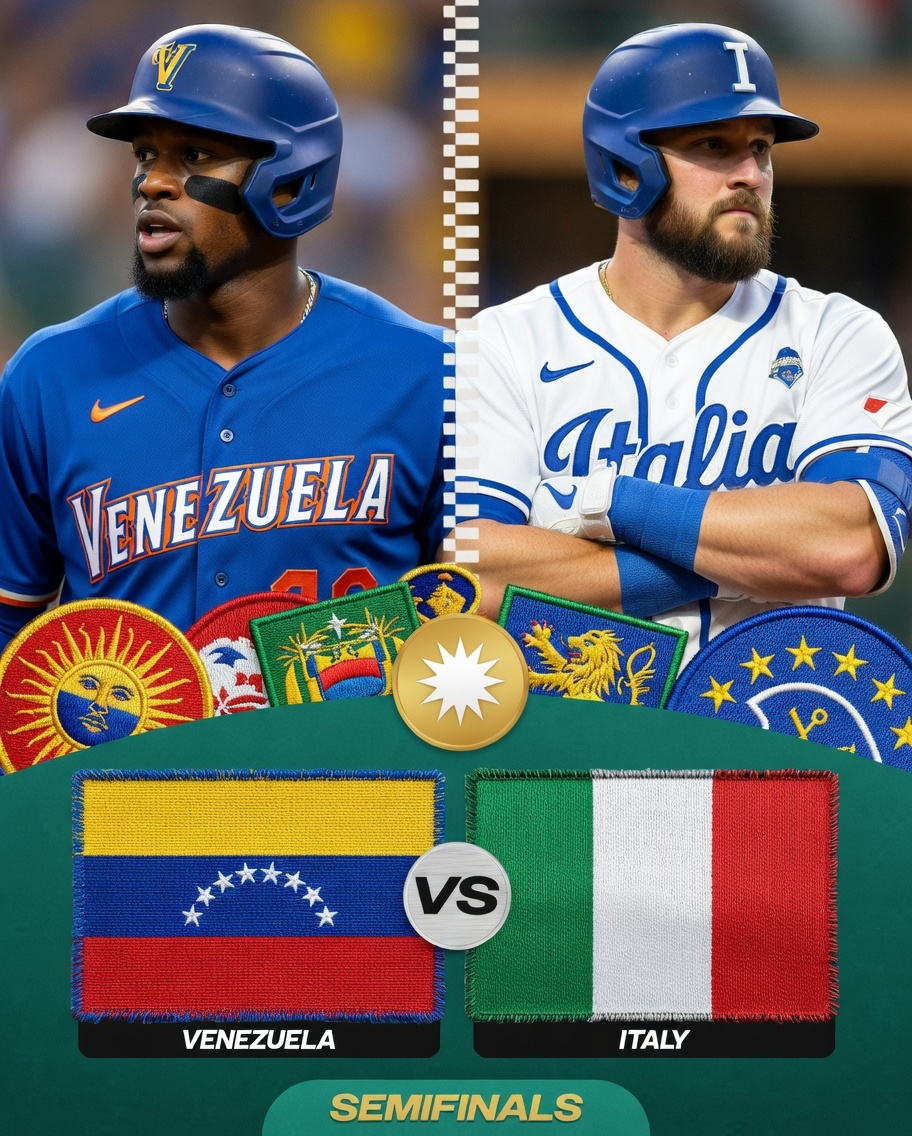
The 2026 World Baseball Classic (WBC) has reached a fever pitch as the knockout stage brings together two of the most intriguing narratives in international baseball: the star-studded juggernaut of Venezuela and the resilient, heritage-driven squad from Italy. This quarterfinal matchup is more than just a game; it is a collision of cultures, styles, and baseball philosophies. As Venezuela looks to solidify its status as a global powerhouse, Italy aims to prove that their upset over Team USA in the group stage was no fluke. With a spot in the semifinals on the line, the intensity at the ballpark is expected to be unprecedented.
A battle for the semifinals: Venezuela and Italy face off in a high-stakes WBC elimination game. Photo: Local Weekly Paper Sports.
Venezuela enters the quarterfinals as one of the most balanced and dangerous teams in the tournament. Led by veteran leaders and emerging superstars, their lineup reads like a “Who’s Who” of Major League Baseball. The offensive engine is driven by a combination of elite contact hitting and raw power. Players like Ronald Acuña Jr. and Jose Altuve provide the veteran presence necessary for high-pressure knockout games, while younger talents have stepped up to deliver clutch hits throughout the group stage.
The Venezuelan strategy focuses on relentless offensive pressure. Their ability to string together hits and capitalize on defensive lapses makes them a nightmare for any pitching staff. However, beyond their bats, Venezuela’s pitching rotation has shown remarkable depth. By utilizing a “piggyback” starter system, they ensure that high-leverage relievers are always available to shut down potential rallies. For Italy to succeed, their pitchers will need to navigate this minefield of a lineup with surgical precision.
Italy’s journey to the 2026 quarterfinals has been nothing short of inspirational. Comprised largely of American-born players of Italian descent and stars from Italy’s domestic Serie A, this team plays with a distinctive “nothing to lose” attitude. Their manager, Francisco Cervelli, has instilled a culture of grit and tactical discipline that has already claimed the scalp of Team USA. Italy doesn’t rely on a single superstar; instead, they thrive on a collective effort where every bunt, stolen base, and defensive shift matters.
The Italian pitching staff, led by the surprise performances of veterans and minor league standouts, has utilized a “mixing” philosophy—changing speeds and locations to keep heavy hitters off-balance. Against Venezuela, Italy’s defense will be under constant siege. The Italian infield, noted for its chemistry and range, will be the key to keeping the game close. If Italy can keep the score within reach into the late innings, their fundamental approach to small-ball could provide the opening they need for another historic upset.
The outcome of Venezuela vs. Italy will likely be decided by how each manager handles their bullpen under the strict WBC pitch-count rules. Venezuela is expected to start an established MLB ace, but the real battle begins in the 4th or 5th inning. Italy, conversely, often employs an “opener” strategy or shorter leashes for their starters to maximize favorable matchups. This creates a fascinating tactical environment where every substitution could change the course of the game.
| Statistical Category | Venezuela (Pool Play) | Italy (Pool Play) |
|---|---|---|
| Team Batting Average | .295 | .258 |
| Home Runs | 11 | 4 |
| Team ERA | 2.84 | 3.15 |
| Errors Committed | 2 | 1 |
*Data based on group stage performance entering the quarterfinals.
One of the most anticipated individual matchups is Ronald Acuña Jr. facing Italy’s deceptive rotation. Acuña has been in scintillating form, showcasing the “power-speed” combo that makes him a perennial MLB MVP candidate. For Italy, the challenge is not just striking him out, but preventing him from taking extra bases or disrupting the pitcher’s rhythm while on first. The Italian catchers will need to be perfect in their execution to neutralize the Venezuelan running game, which often serves as the spark for their big scoring innings.
On the flip side, Italy’s offensive hopes may rest on the shoulders of players who have found their second wind in the WBC. The “Italian-American connection” has provided several clutch hits during pool play, often coming from lower in the order. This depth is what allows Italy to stay competitive even when their primary sluggers are being pitched around. If Venezuela underestimates the bottom of the Italian order, they may find themselves in a precarious position late in the contest.
Historically, Venezuela has always been a factory for elite baseball talent, but they have often struggled to translate that individual success into a WBC championship. This 2026 run feels different, with a palpable sense of unity and national mission. For Italy, reaching the quarterfinals for consecutive tournaments would be a monumental achievement for European baseball, which continues to grow in the shadow of more traditional powerhouses. A win for Italy would be a massive statement for the internationalization of the sport, while a win for Venezuela would set up a “Dream Team” semifinal matchup that fans have been craving since the tournament began.
The viewership numbers for this matchup are expected to break records in both South America and parts of Europe, further justifying the expansion and investment in the World Baseball Classic format. As MLB continues to promote the global game, matchups like Venezuela vs. Italy serve as the perfect advertisement for the excitement and unpredictability that international baseball provides.
As the winner of this quarterfinal prepares to advance, the landscape of the remaining bracket will shift significantly. A Venezuelan victory would reinforce the dominance of the Americas in the later rounds, likely setting up a collision course with other regional giants. However, an Italian victory would shatter the established hierarchy, forcing analysts to reconsider the ceiling for European baseball on the world stage. Regardless of the final score, the lessons learned in this game—about bullpen management, defensive positioning, and the importance of momentum—will be vital for whoever moves on to the semifinals in Miami.
The eyes of the baseball world remain fixed on this quarterfinal, as it represents the very essence of the WBC: high-level competition fueled by intense national pride. For the fans in Caracas and Rome, the next nine innings will be an emotional rollercoaster that could define their sporting year. As the first pitch approaches, the only certainty is that both Venezuela and Italy are ready to leave everything on the field in pursuit of a spot in the final four.